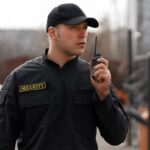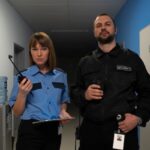
Security incidents rarely escalate without warning. In most environments, the first person to observe risk, disruption, or emergency conditions is a security guard on duty. That is why Professional Security Guards Services Vancouver will cease to be considered as mere deterrents, but as the frontline communicators in case of crisis. They are currently engaged in the activities of relaying information, coordination, and real-time decision support in addition to patrols. This blog describes the role of security guards as the initial step of crisis communication, why this position is significant, and what operational criteria constitute effective communication in a high-risk environment.
Understanding Crisis Communication in Security Operations
Crisis communication refers to the structured exchange of accurate information during an emergency. In security environments, this includes internal reporting, coordination with emergency services, and on-site guidance to occupants or staff.
Security guards operate at the point of first contact. They witness events as they happen in front of the management, responders or the authorities without their awareness. Their responses during the initial minutes can minimize confusion, minimize damage and save lives.
Effective crisis communication depends on three core elements: observation, clarity, and speed. Guards are trained to identify abnormal activity, assess severity, and communicate facts without speculation.
Why Security Guards Are the First Communicators on Site
Unlike remote monitoring or automated systems, guards are physically present. This gives them situational awareness that cannot be replaced by cameras or alarms alone.
The first communicators are security guards as they are assigned at the entry points, walking pathways, and areas with restricted access. They communicate with the staff, with the residents and visitors too since they tend to observe when the staff are involved in behavioral or safety breaches in due time, hence verbal instructions, appropriate reporting and an immediate escalated response without hesitation.
Key Communication Responsibilities During a Crisis
Security guards follow structured communication protocols to avoid misinformation and panic. These responsibilities are procedural, not improvised.
Incident Identification and Reporting
The first responsibility is recognizing an incident and determining whether it qualifies as a security or safety threat. Guards report only confirmed facts, including location, time, and visible risks.
This prevents overreaction and ensures management receives accurate information.
On-Site Direction and Crowd Control
Guards communicate directly with people on site. Clear instructions help prevent bottlenecks, injuries, or unauthorized access.
Communication is calm, concise, and repeated as needed.
Liaison With Emergency Services
Security guards often act as the primary contact for police, fire, or medical responders. They provide situational updates and guide responders to the exact location.
This reduces response time and confusion during entry.
Training That Supports Crisis Communication

Crisis communication is not instinctive. It is taught through structured training and operational drills.
Highly effective teams rely on highly trained professional guards Vancouver who receive instruction in:
The security training will include incident reporting guidelines, emergency response communication, de-escalation, radio and digital communication protocols. This preparation helps to make the guards convey the information to the authority, correctly and uniformly, even in the highly pressurized circumstances in which precise information is most essential.
Communication Tools Used by Security Guards
Modern security operations use standardized communication tools to ensure clarity during emergencies. Two-way radios with dedicated channels enable instant coordination, while digital reporting systems provide real-time updates. Incident logs and escalation matrices ensure accurate documentation and structured response, helping security teams make faster, well-informed decisions under pressure.
How Clear Communication Prevents Escalation
The incident itself is usually not so harmful as poor communication. Late or vague communications cause panic, misguidance and liability.
Effective communication helps:
- Control crowd movement
- Prevent the spread
- Support emergency responders
- Maintain operational continuity
Security guards act as stabilizers. Their communication reassures occupants while management evaluates next steps.
Role of Guards in Different Security Environments
Depending on the type of site communication during the crisis, functions are different, but the principles are similar.
In office buildings, security guards interact with building administrators and tenants.
They communicate safety hazards and access control boundaries at construction sites.
They control the crowds and exit routes during events.
Guards work in communication hierarchies in any case.
Why Clients Should Prioritize Communication Skills

When selecting security services, communication capability should be evaluated alongside physical presence.
Organizations benefit when guards:
- Report incidents clearly and quickly
- Follow escalation protocols without delay.
- Interact professionally with the public.
- Coordinate effectively with authorities.
This is where Professional Security Guards Services Vancouver differentiates operational providers from basic staffing vendors.
Accountability and Documentation After a Crisis
Communication does not end when the incident is resolved. Guards are responsible for post-incident reporting.
Accurate documentation supports:
- Internal reviews
- Insurance claims
- Compliance requirements
- Process improvement
Clear reports reflect training quality and operational discipline.
The Operational Value of Skilled Communication
Security guards are no longer passive observers. They are active participants in crisis response and information flow.
Organizations that rely on highly trained professional guards in Vancouver gain faster response times, reduced confusion, and better coordination during critical moments.
Crisis communication is now a core security function, not an added benefit.
Conclusion
Security guards play the role of initial crisis communication, having first hand eye on the events, providing correct information and instructing on-site reaction. Their service helps with safety, coordination, and operational control in case of an emergency. The results in every setting are better when the guards are trained under good communication protocols.
For organizations seeking dependable, communication-focused security support, Cadmus Security Services delivers structured, professional solutions.
FAQs
How do security guards communicate during emergencies?
They use radios, reporting systems, and direct verbal instructions following established protocols.
Why is crisis communication important in security services?
It prevents panic, ensures accurate reporting, and speeds up emergency response.
Are security guards trained to speak with emergency responders?
Yes, trained guards act as liaisons, providing clear location and risk details.
What makes professional security guards effective communicators?
Training, situational awareness, clear protocols, and experience in real-world incidents.