A Vancouver retail store owner once told me her biggest fear was not a break-in overnight. It was the guy who walked through her front door at 2 pm, chatted with her staff, and walked out with three jackets under his coat. Nobody noticed until closing. That’s the thing about business security threats. They rarely look like the movies. Most of the time, they are quiet, slow, and easy to miss until the damage is already done.
If you run a business in this city, whether it’s a retail shop, a warehouse, a construction site, or a downtown office tower, you are dealing with risks that go far beyond a broken window. This blog breaks down the real threats businesses face today and what actually works to stop them, based on what we see day to day, providing professional security solutions in Vancouver.
Why Business Security Threats Are Getting Harder to Ignore
Property crime in BC has been climbing for a few years now, and Vancouver specifically has seen upticks in commercial break-ins and organized retail theft. It’s not just a feeling business owners have. Insurance companies have noticed too, which is part of why premiums keep creeping up for properties without visible security measures in place.
Threats don’t come from one direction either. A business can be doing everything right on the physical side and still get hit through a weak digital system, an unlocked back door, or an employee who wasn’t properly vetted. Security today is a layered problem, and treating it like a single lock-and-key issue is where a lot of businesses go wrong.
The Most Common Threats Businesses Face
Theft and Shoplifting
This is the one everyone thinks of first, and for good reason. Retail loss from theft, both external and internal, costs Canadian businesses billions every year. It’s rarely a single dramatic incident. It’s small, repeated losses that add up quietly over months.
Vandalism and Property Damage
Graffiti, broken windows, damaged signage. It happens more at night and on properties that sit empty for stretches, like construction sites or vacant commercial units. Even minor vandalism adds up fast in repair costs and insurance claims.
Unauthorized Access
Tailgating into secure buildings, unlocked service entrances, lost key fobs that never get deactivated. This one gets overlooked constantly because it doesn’t feel dramatic. But unauthorized access is often the first step before something worse happens.
Workplace Violence and Aggressive Behavior
Retail staff, healthcare workers, and concierge teams deal with this more than people realize. An aggressive customer, a domestic situation spilling into the workplace, an unstable individual wandering into a lobby. Staff without training or backup often freeze in these moments, and that hesitation is exactly what puts people at risk.
Internal Threats
Not every threat comes from outside. Employee theft, data leaks, and policy violations from within the organization are some of the hardest issues to catch because trust is already built in. A lot of businesses don’t want to think about this one, but it’s consistently one of the more costly categories of loss.

Cyber-Physical Overlap
This one’s newer and catching a lot of businesses off guard. Access control systems, camera networks, and alarm systems are all connected to the internet now. If those systems are not maintained properly, a cyber breach can turn into a physical security failure pretty fast. A hacked door control system is just as dangerous as a stolen key.
What Actually Prevents These Threats
Cameras alone don’t stop crime. Neither does a sign in the window saying “monitored 24/7” if nothing is backing it up. Real prevention comes from layering visible deterrents with trained response.
Here’s what tends to make the biggest difference for businesses we work with:
- On-site commercial security guards who are trained to spot suspicious behavior before it turns into an incident, not just react after something’s gone wrong
- Access control systems paired with a policy that actually gets enforced, not just installed and forgotten.
- Mobile patrol services for properties that don’t need a guard stationed full-time but still need regular, unpredictable checks
- Staff training on de-escalation and reporting procedures, because most incidents are handled better by a calm, prepared employee than a panicked one.
- Routine security audits to catch the small gaps, like a door that doesn’t latch properly or a camera angle with a blind spot
A construction company we have worked with in the Lower Mainland cut theft losses on materials by more than half within a few months of adding mobile patrols and a stationed guard during off hours. Nothing fancy. Just consistent presence and a visible deterrent, which is honestly what most criminals are trying to avoid in the first place. They want easy targets, not resistance.
Why Uniformed Presence Still Matters
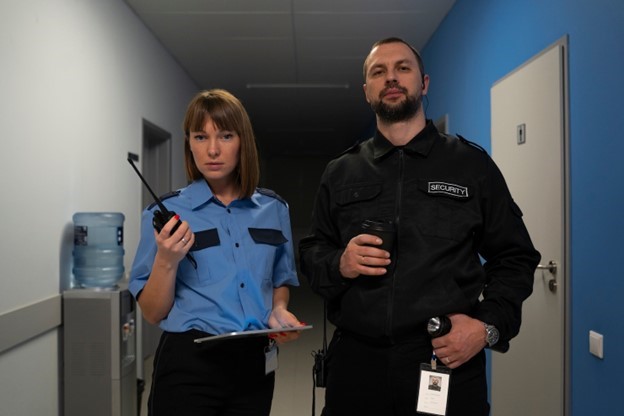
There’s a reason so many businesses still invest in commercial security guards in Vancouver, even with all the tech options available now. A visible, trained guard changes behavior on the spot. People act differently when they know someone’s watching and ready to respond, not just recording for later.
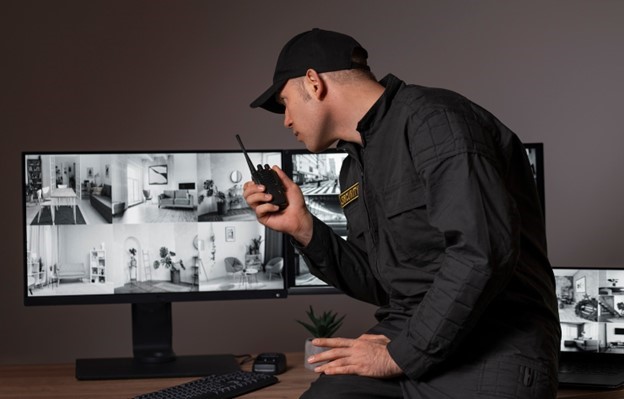
Technology is great for evidence and monitoring. But it doesn’t stop a fight from breaking out or a shoplifter from walking out the door. That gap is where trained personnel earn their keep, and it’s why the strongest security plans combine both rather than picking one over the other.
Building a Security Plan That Fits Your Business
Every business is different, and honestly, a one-size-fits-all security plan rarely works well. A retail store on a busy street has different exposure than a warehouse on the edge of an industrial park. What matters is matching the coverage to the actual risk, not just buying the biggest package available.
A good starting point looks like this:
- Walk your property and identify the weak points, entrances, blind spots and poorly lit areas
- Review past incidents, even small ones, to spot patterns
- Decide where a physical guard presence makes sense versus where technology can cover the gap
- Set clear protocols for staff so everyone knows what to do when something happens
- Revisit the plan every few months, because risks shift with the seasons and with your business itself
This is exactly the kind of work corporate security services in Vancouver are built around, matching the right mix of people, technology, and process to the property instead of guessing.
Conclusion
Security threats facing businesses aren’t going away, and honestly, some of them are getting more complicated as physical and digital systems overlap more each year. But most of the damage is preventable with the right combination of trained people, smart technology, and a plan that actually gets followed instead of sitting in a drawer somewhere.
The businesses that handle this well aren’t the ones with the biggest budgets. They are the ones who treat security as an ongoing habit rather than a one-time purchase. Cadmus Security Services works with businesses across Vancouver to build exactly that kind of plan, practical, layered, and built around the risks that actually matter to your property.
FAQs
What are the most common security threats businesses face in Vancouver?
Theft, vandalism, unauthorized access, and workplace violence are the most frequent issues, with retail and construction properties seeing the highest exposure due to foot traffic and unattended hours.
How can commercial security guards help prevent business theft?
A visible, trained guard acts as an immediate deterrent and can intervene in real time, something cameras alone can’t do. Guards also spot suspicious behaviour before it escalates into an actual loss.
Is mobile patrol enough for a small business, or do I need a stationed guard?
It depends on your risk level and hours of operation. Lower-risk properties often do fine with regular patrol checks, while higher-traffic or higher-value properties usually benefit from a stationed presence, especially during off hours.
How often should a business review its security plan?
Every few months at minimum, or anytime there’s a change in operations, layout, or after any incident. Risks shift over time, and a plan built a year ago may already have gaps.